

Why Your Business Needs a Custom Dashboard (Not Another Spreadsheet)
Your team spends hours every week building reports in Excel. A custom dashboard does it in real time — and pays for itself within months.
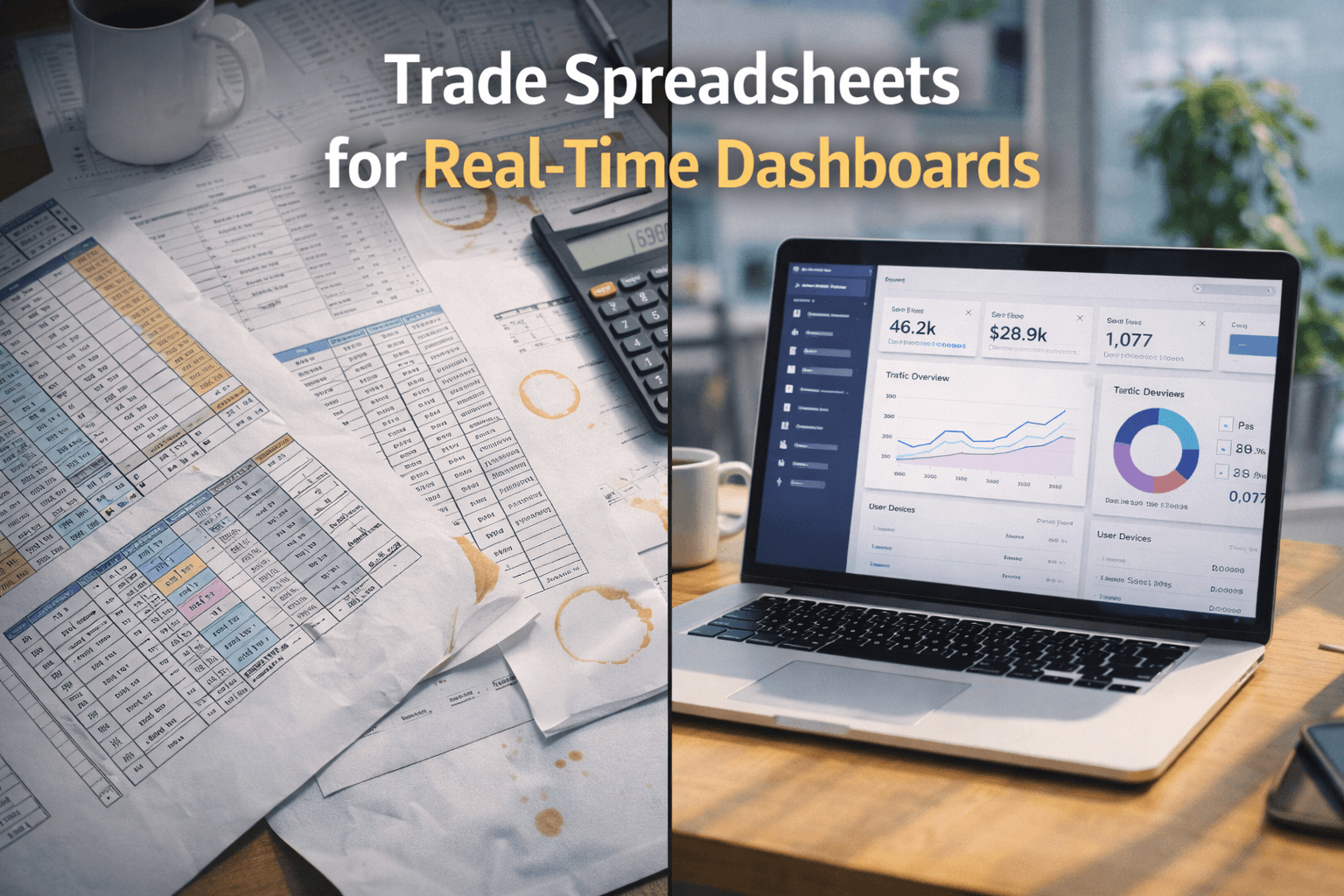
Your director of operations spends 6 hours every Monday morning copying data from three different tools into a spreadsheet so the leadership team can see last week's numbers.
That spreadsheet is costing your company more than you think.
The Spreadsheet Tax
Spreadsheets are incredible tools — for individuals. For running a business? They're a liability.
Here's what goes wrong:
Manual data entry = human error. Studies show that 88% of spreadsheets contain at least one error. When your financial reports, inventory counts, or sales forecasts are based on manual data entry, you're making decisions on bad data.
Static snapshots = stale decisions. Your spreadsheet shows what happened last week. Your competitor's dashboard shows what's happening right now. Who makes better decisions?
Single point of failure = risk. When the person who built the spreadsheet leaves, nobody understands the formulas. We've seen companies lose months of productivity because their "reporting system" was a single Excel file on someone's laptop.
What a Custom Dashboard Actually Does
A custom dashboard connects directly to your data sources — your CRM, payment processor, inventory system, marketing tools — and displays real-time metrics in one place.
No manual entry. Data flows automatically.
No waiting for Monday. Check your numbers anytime, from any device.
No single point of failure. It runs on a server, not someone's desktop.
Real examples:
| Business Type | Spreadsheet Pain | Dashboard Solution |
|---|---|---|
| E-commerce | Weekly revenue report takes 3 hours | Real-time revenue, orders, and inventory |
| Agency | Project profitability calculated monthly | Live margin tracking per project |
| SaaS | Churn analyzed quarterly in Excel | Daily churn alerts with cohort analysis |
| Logistics | Fleet status updated via radio calls | Live GPS tracking + delivery ETAs |
The ROI Math
If your team spends 10 hours/week on manual reporting across all departments, at an average cost of $40/hour:
10 hours × $40 × 52 weeks = $20,800/year wasted on work a dashboard does instantly.
A custom dashboard typically costs $15,000–$50,000 to build. It pays for itself in year one and keeps saving every year after.
Factor in better decisions from real-time data and the ROI multiplies.
When a Spreadsheet Is Still Fine
Not everything needs a dashboard:
- One-time analysis or ad hoc calculations
- Personal task tracking
- Quick what-if scenarios
- Fewer than 100 rows of data that rarely change
But if you're running a team, department, or company on spreadsheets — you've outgrown them.
Ready to replace your spreadsheets with real-time intelligence? MAGEHIRE builds custom dashboards that connect all your data sources into one clean view. Let's talk about what you need to see.
Keep Reading
Explore more insights from our team

Web App vs Mobile App: Which to Build First
Debating between launching a web application or mobile application first? We guide you through the comparative unit economics, distribution channels, and update lifetimes. For most B2B products, web functions better to achieve MVP status, but there are a few notable exceptions.

Technical Cofounder vs Development Partner
Finding a highly capable technical cofounder is notoriously tricky. Should you offer equity for a CTO or pay a committed dev agency for your product's lifecycle? We break down the dynamics, cost risks, and hybrid approaches for early-stage entrepreneurs looking to build without holding up progress.
Scale Your Project
Ready to build high-performance software? Our experts in New York handle the technical heavy lifting so you can focus on growth.
Get a Free Consultation