

Startup Tech Stack Guide: What to Choose in 2026
Covers the full startup tech stack decision in 2026: why the JavaScript/TypeScript full-stack with Next.js, Supabase, Clerk, Stripe, and Vercel is the dominant fast-moving stack, where Python makes sense, how to add an AI layer, and what stack decisions are hardest to reverse.
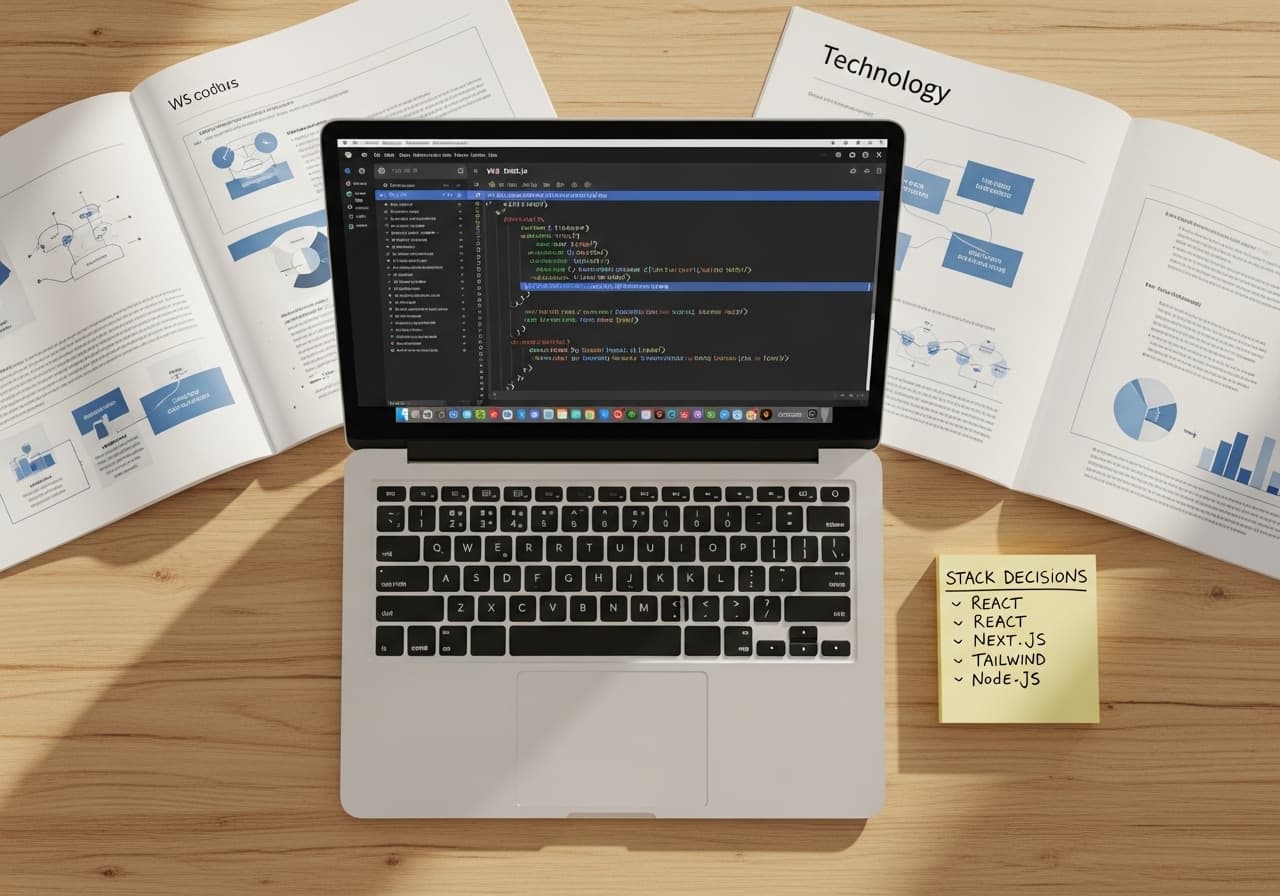
Startup Tech Stack Guide: What to Choose in 2026
The best startup tech stack in 2026 is the one your team ships fastest with — but within that constraint, certain stacks have materially better tooling, hiring markets, AI integration support, and managed service ecosystems than others. The TypeScript full-stack (Next.js + Supabase + Clerk + Stripe + Vercel) is the dominant fast-moving stack for web-based SaaS products. Python is the right choice when the core product is ML/AI-heavy. The critical decisions are the ones hardest to reverse: database choice, language, and hosting model.
Frontend: Next.js 15 (App Router)
Next.js is the default frontend framework for new SaaS products in 2026. The App Router provides server components, streaming, file-based routing, and integrated API routes — eliminating the need for a separate backend framework for most SaaS products.
Why Next.js over alternatives: React Server Components reduce JavaScript bundle size, Vercel provides zero-config deployment, the Shadcn/UI + Tailwind ecosystem is the richest in React, and full-stack TypeScript means frontend and API routes share types.
When to consider alternatives: Remix for form-heavy applications, SvelteKit for teams that find React's mental model expensive, Nuxt.js for Vue.js teams.
Backend / API: Next.js Route Handlers or Hono
For most SaaS products, Next.js Route Handlers cover backend needs without a separate service. For standalone APIs (mobile clients, external integrators), Hono is the recommended lightweight option — TypeScript-native, runs on Node.js, Cloudflare Workers, and Deno.
If the backend logic is ML/AI-heavy, use Python with FastAPI — keep TypeScript for the frontend and API layer, use Python for services doing heavy computation.
Database: Supabase (PostgreSQL)
Supabase is the default database choice: managed PostgreSQL with a TypeScript client, built-in row-level security, realtime subscriptions, storage, and edge functions — all in one platform.
Why Supabase: PostgreSQL is the most production-proven relational database, built-in RLS makes multi-tenant data isolation straightforward (see the multi-tenant architecture guide), the free tier is generous, and Supabase Storage and Edge Functions reduce the number of separate services required.
Alternatives worth considering: PlanetScale for extreme write throughput, Neon for highly variable traffic that benefits from scale-to-zero billing, MongoDB for genuinely document-oriented data models.
Auth: Clerk
Clerk provides: email/password and social OAuth login, MFA, organization (multi-tenant) management with role assignment, pre-built UI components, and JWTs compatible with Supabase RLS.
Roll your own auth only if you have a specific requirement Clerk can't meet or if the cost at scale is prohibitive.
Payments: Stripe
Stripe Billing is the only choice worth considering for SaaS subscription billing. See the SaaS billing with Stripe guide for implementation patterns.
Hosting: Vercel + Railway
Vercel for the Next.js application — zero-config deployment, preview deployments for every PR, edge network. Railway for background services or standalone API services — simpler and cheaper than AWS for early-stage products.
AI Layer: Vercel AI SDK or OpenAI SDK
For SaaS products with AI features, the Vercel AI SDK is the recommended integration layer — React hooks for streaming AI responses, supports multiple providers (OpenAI, Anthropic, Google), and integrates natively with Next.js. For backend-only AI pipelines, use the OpenAI or Anthropic SDK directly.
Model choice: GPT-4o for complex reasoning and structured extraction, GPT-4o mini for high-volume cost-sensitive tasks, Claude 3.5 Sonnet for long-document processing.
The Full Recommended Stack
| Layer | Recommendation | Alternative |
|---|---|---|
| Frontend | Next.js 15 (App Router) | Remix, SvelteKit |
| Styling | Tailwind CSS + Shadcn/UI | CSS Modules |
| Backend | Next.js Route Handlers | Hono, FastAPI |
| Database | Supabase (PostgreSQL) | Neon, PlanetScale |
| Auth | Clerk | Auth.js, Lucia |
| Payments | Stripe Billing | — |
| Hosting | Vercel + Railway | Fly.io, Render |
| AI | Vercel AI SDK + GPT-4o | Anthropic SDK + Claude |
| Resend + React Email | Postmark | |
| Monitoring | Sentry + PostHog | Datadog, Mixpanel |
What Decisions Are Hardest to Reverse
Database: Switching post-launch requires data migration, schema rewrite, and ORM changes. PostgreSQL is safe.
Language: A Next.js + TypeScript codebase cannot gradually become a Python codebase — a rewrite is required. If ML/AI is core from day one, start with Python for AI services.
Auth provider: Migrating authentication providers post-launch means migrating password hashes and session tokens — technically possible but operationally risky.
Ready to Choose a Stack and Ship?
The stack decisions above apply to the majority of B2B SaaS products. Magehire builds on this stack and has the production experience to advise on edge cases where the defaults don't apply. Schedule a strategy session to get a stack recommendation tailored to your specific product.
?Frequently Asked Questions
Keep Reading
Explore more insights from our team

Etched Hits $5B Valuation and $1B Sales in AI Chip Market
Etched emerges as a formidable rival to Nvidia, achieving a $5 billion valuation and $1 billion in sales, reshaping the AI chip landscape.
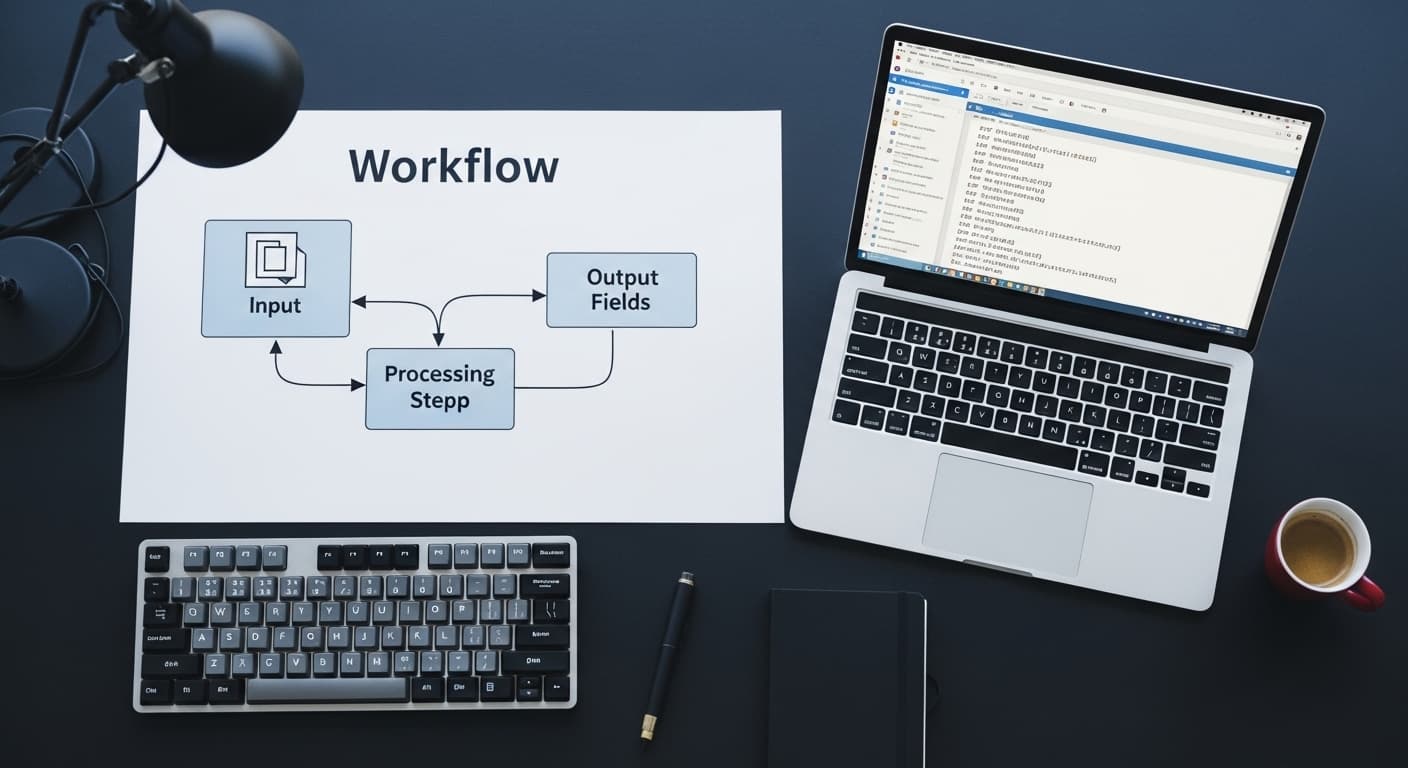
How to Automate Business Processes With LLMs in 2026
Step-by-step framework for identifying which business processes are LLM-automatable, designing the pipeline architecture, selecting orchestration tools (LangChain, n8n, custom), and building validation layers that make outputs production-safe.
Scale Your Project
Ready to build high-performance software? Our experts in New York handle the technical heavy lifting so you can focus on growth.
Get a Free Consultation